Top 5 Tips for Choosing Degradable Trays for Eco Friendly Packaging?
In today's world, choosing the right packaging is crucial for sustainability. Degradable trays present an excellent option for eco-friendly solutions. These trays decompose over time, reducing environmental impact. However, selecting the ideal degradable tray involves consideration of various factors.
Understanding the materials used is essential. Not all degradable trays break down equally. Some may leave harmful residues. Quality varies widely, influenced by manufacturing processes. It's essential to research different brands and their certifications. Choosing the right product can be challenging.
Another aspect to ponder is the tray's functionality. Does it meet your product's needs? Can it handle the weight? Think about how the degradable tray performs in different conditions. It's a delicate balance between convenience and sustainability. While we strive for eco-friendliness, it's also vital to ensure the product remains effective.

Understanding the Importance of Degradable Packaging in Sustainability
Degradable packaging plays a vital role in sustainability. It directly impacts waste management and pollution reduction. According to a report by the Ellen MacArthur Foundation, around 300 million tons of plastic are produced annually, and only 9% is recycled. This staggering number highlights the need for efficient alternatives.
Choosing degradable trays can help businesses reduce their environmental footprint. These trays are designed to break down naturally. Research indicates that if more companies opted for such solutions, it could significantly decrease landfill waste. However, not all degradable materials are created equal. Consumers should remain cautious and informed about certifications and degradation timelines.
The importance of actionable choices cannot be overstated. Many consumers still find it challenging to differentiate between compostable and biodegradable. Clear labeling and education are crucial. A survey found that over 70% of consumers actively seek greener products yet often feel misled. This requires brands to step up and be transparent. Ultimately, the benefits of degradable packaging can only be realized through collaborative efforts and ongoing consumer awareness.
Top 5 Tips for Choosing Degradable Trays for Eco Friendly Packaging
This bar chart illustrates the top factors to consider when selecting degradable trays for eco-friendly packaging. Each factor is rated on a scale of 1 to 10 based on its importance in sustainability efforts.
Key Materials to Consider for Eco-Friendly Trays
When selecting degradable trays for eco-friendly packaging, the choice of materials is crucial. Many industries are shifting toward sustainable solutions to meet rising consumer demands. A 2022 report by Smithers highlighted that 70% of consumers prefer environmentally friendly packaging. This statistic illustrates the growing urgency for brands to adapt.
One notable material is PLA (polylactic acid), derived from corn starch. It can decompose in industrial composting facilities. However, it requires specific conditions to break down effectively. This dependence on composting infrastructure can pose challenges for widespread adoption. Some brands may overlook local composting capabilities, leaving consumers confused about disposal options.
Another option is bagasse, a byproduct of sugarcane. It's biodegradable and offers a natural alternative to plastic. Trays made from bagasse can withstand temperatures up to 200 degrees Fahrenheit. They are a solid choice for restaurant takeout, but they can be prone to sogginess in wet conditions. Balancing durability with eco-friendliness remains a challenge that many manufacturers must overcome.
When choosing materials, always consider your local environment. Research certified biodegradable options available in your region. Understand the disposal methods that fit your product and customer base. Choices matter, and companies must remain vigilant in evaluating the impact of their packaging decisions.
Evaluating the Lifespan and Environmental Impact of Degradable Trays
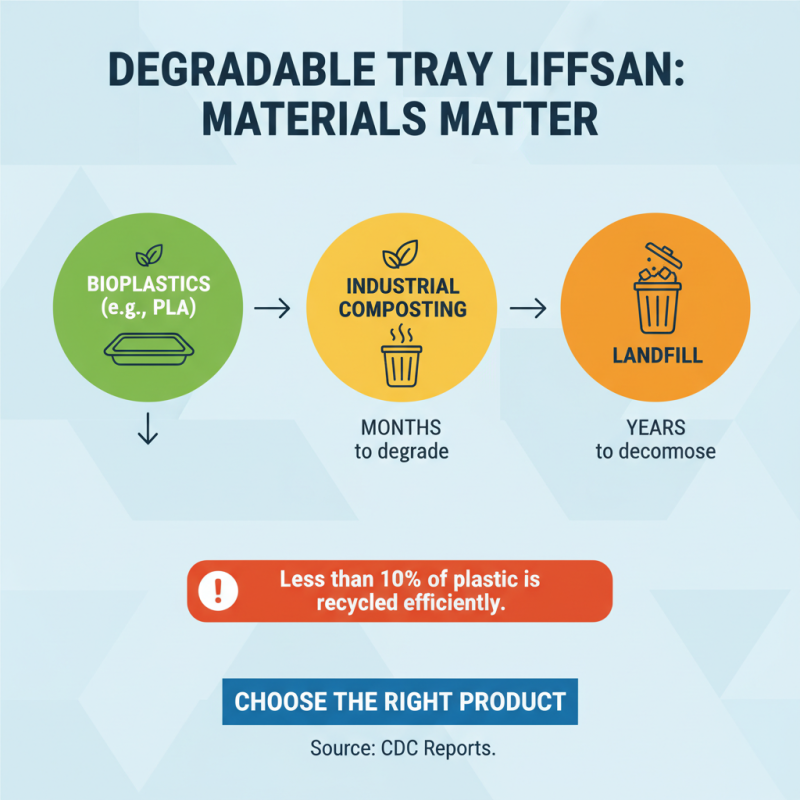
When evaluating the lifespan of degradable trays, the materials used play a crucial role. Many trays are made from bioplastics, which can degrade over time in specific conditions. For instance, polylactic acid (PLA) can break down into natural elements. This process may take only a few months under industrial composting conditions. However, in a landfill, the same materials might take years to decompose. CDC reports indicate that less than 10% of plastic is recycled efficiently. This highlights the importance of choosing the right product.
The environmental impact of these trays also demands attention. Research shows they can reduce the carbon footprint significantly compared to traditional plastic. For example, bioplastics can result in up to 60% lower greenhouse gas emissions during their lifecycle. However, the challenge remains in their actual disposal. If not handled properly, the environmental benefits diminish. Degradable trays that end up in landfills still contribute to pollution.
Moreover, many consumers are not aware of the distinctions between compostable and degradable. This confusion can lead to improper disposal practices. Education on the correct usage of these trays is essential. It ensures that their potential benefits are fully realized. Ultimately, understanding the lifespan and impact of degradable trays is key. Companies should invest in better consumer education to maximize the environmental benefits.
Assessing the Cost-Effectiveness of Degradable Packaging Solutions
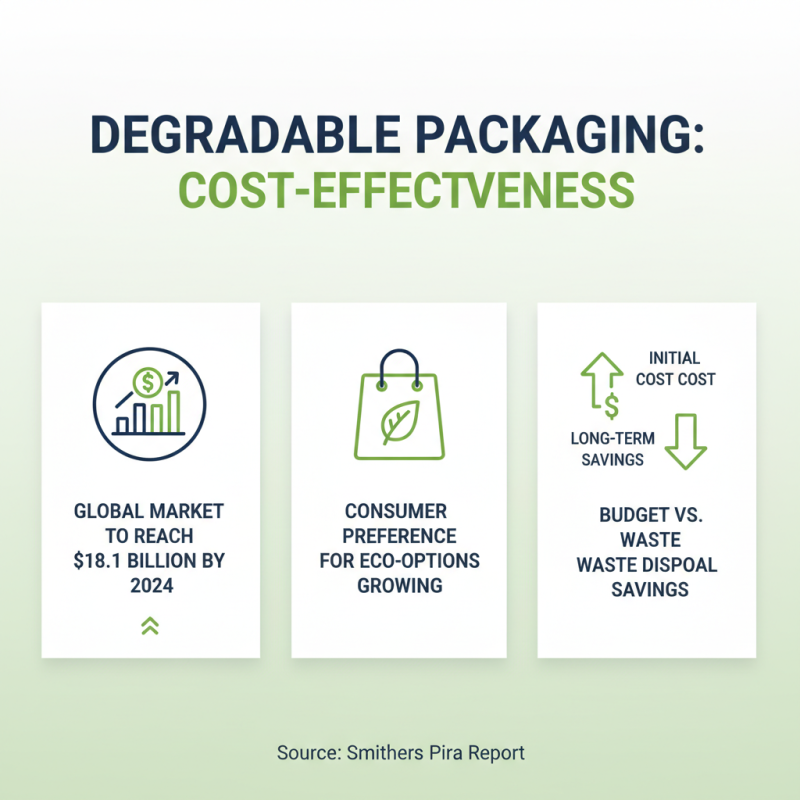
When considering degradable packaging, cost-effectiveness is key. A report from Smithers Pira states that the global biodegradable packaging market will reach $18.1 billion by 2024. This growth signals increasing consumer preference for eco-friendly options. Companies need to evaluate whether switching to degradable trays truly fits their budget. While initial expenses may be higher, long-term savings in waste disposal can be significant.
Investing in degradable materials often means weighing the higher production costs against potential environmental benefits. A study by Grand View Research found that biodegradable materials can reduce landfill waste by over 30% per ton. This has clear implications for sustainable business models. However, the balance between cost and sustainability is not straightforward. Some businesses may find that relying solely on cheaper, non-degradable options is tempting.
Cost analysis should also include consumer perceptions. According to Nielsen, 73% of millennials are willing to pay more for sustainable products. This suggests that despite upfront costs, degradable trays could enhance brand loyalty and sales. Still, companies must scrutinize their choices carefully to ensure that they are not simply greenwashing for marketing gains. The journey toward eco-friendly packaging is nuanced and requires conscientious decision-making.
Finding Certifications for Quality and Eco-Friendliness in Packaging
Choosing degradable trays for eco-friendly packaging involves understanding certifications. These certifications ensure that products meet environmental standards. In 2021, research found that 73% of consumers prefer brands with eco-friendly packaging. This shows the growing demand for sustainable options.
When selecting trays, look for certifications like ASTM D6400 or EN 13432. These indicate that packaging can break down in commercial composting facilities. Not all manufacturers adhere to these standards. Therefore, checking certification details is crucial for quality assurance. In fact, reports highlight that only 30% of biodegradable products are genuinely compostable.
Tip: Always verify the certifications listed by manufacturers. Not every claim is genuine. Additionally, consider the shelf life of degradable trays. Some may not last as long in storage. This can reflect on product quality and safety.
Another important factor is sourcing materials. Look for trays made of natural substances, like plant fibers. A report from the Sustainable Packaging Coalition suggests that using such materials can reduce carbon footprint by up to 30%. But, the market is full of misleading labels. Be vigilant and choose wisely.