Top Tips for Choosing Biodegradable Tableware for Your Business?
As the demand for sustainable practices grows, businesses are increasingly turning to biodegradable tableware. In a recent report by the Environmental Protection Agency (EPA), it was noted that nearly 80% of consumers prefer eco-friendly products. This shift highlights the importance of making informed choices when selecting biodegradable materials. Industry expert Dr. Sarah Green, a leading researcher in sustainable packaging, states, "The future of dining depends on our ability to innovate with biodegradable tableware."
Choosing the right biodegradable tableware involves understanding material sourcing, durability, and environmental impact. Not all biodegradable options break down at the same rate. Some products are designed for industrial composting, while others may require specific conditions to degrade effectively. For businesses, these nuances can have significant implications, both financially and ethically. Selecting the wrong product could lead to waste and possible reputational harm.
Moreover, the market is saturated with options, each claiming to be eco-friendly. It is crucial for businesses to assess supplier credibility and transparency. As Dr. Green points out, "Not all biodegradable claims are created equal." Thus, due diligence in research will not only help in compliance but also align with consumer values. Investing in quality biodegradable tableware is not just a trend; it is a step towards a more sustainable future.

Understanding Biodegradable Tableware and Its Importance for Businesses
Biodegradable tableware is gaining attention in today’s eco-conscious world. More businesses are recognizing its significance for sustainability. Using biodegradable options reduces plastic waste. These products decompose naturally, minimizing their environmental impact. This shift can attract eco-friendly consumers who prioritize sustainability.
Understanding biodegradable materials is crucial. They often come from plants or are made using natural processes. This makes them a safer choice for the environment. However, not all biodegradable tableware is created equal. Some items may break down only in commercial composting facilities, not in home compost. Selecting the right type is essential for effectiveness.
Moreover, consider the lifecycle of the products. Although they may seem eco-friendly, production methods impact their overall sustainability. Researching suppliers can provide insights into their practices. This ensures that your choice aligns with your business values. Consumers today demand transparency, and providing it can enhance your brand's trustworthiness. The journey to sustainability is ongoing, and reflection is necessary to improve.
Top Tips for Choosing Biodegradable Tableware for Your Business
| Criteria |
Details |
Benefits |
| Material |
Choose products made from plant-based materials such as PLA (polylactic acid) or bagasse (sugarcane pulp). |
Environmentally friendly, compostable, reduces carbon footprint. |
| Certification |
Look for certifications like ASTM D6400 or EN 13432 to ensure biodegradability. |
Assures customers of product quality and sustainability. |
| Size Variety |
Select a range of sizes for different food items, including plates, bowls, and cutlery. |
Versatility for different types of meals and presentations. |
| Cost |
Compare prices among suppliers but be mindful of quality and durability. |
Budget-friendly options can enhance cost-effectiveness. |
| Supplier Reliability |
Research suppliers’ reputation and their commitment to sustainability. |
Ensures consistent supply and support for sustainability claims. |
Key Factors to Consider When Selecting Biodegradable Tableware
When selecting biodegradable tableware for your business, it's crucial to consider material composition. According to a report from the Biodegradable Products Institute, materials like PLA and bamboo are popular choices due to their compostability. PLA, derived from cornstarch, breaks down in strategic composting. Bamboo, a rapidly renewable resource, offers strength and sturdiness. Both options align with eco-friendly practices.
Another key factor is the product’s end-of-life disposal. Research indicates that 60% of consumers prefer eco-friendly tableware that can break down safely. Businesses should ensure that local disposal facilities can handle these materials. Understanding local regulations is essential—some areas may not accept all biodegradable items. Inadequate disposal options can lead to confusion for customers.
Lastly, think about your brand's sustainability goals. Authentic commitment to sustainability helps build trust. A striking 70% of consumers support brands that prioritize eco-friendly practices. However, not all biodegradable options meet expectations. It’s vital to evaluate certifications and testing claims for reliability. These factors influence public perception and ultimately impact your business's reputation.
Types of Biodegradable Materials Used in Tableware Production
In the growing world of sustainable practices, choosing biodegradable tableware is crucial for eco-conscious businesses. Various biodegradable materials are available for tableware production, each with distinct advantages and limitations. Starch-based plastics are popular. These materials often break down quickly, but they may not always withstand high temperatures.
Another option is bamboo. This renewable resource is sturdy and stylish, appealing to many consumers. However, bamboo products can sometimes be more expensive than traditional tableware. Additionally, paper-based items, often coated with natural wax or compostable materials, offer another eco-friendly choice. They are generally lightweight, yet they may lack durability for wet or greasy foods.
From practicality to aesthetics, the choice of biodegradable materials should align with your business’s needs. It's important to consider environmental impact alongside cost and functionality. Reflecting on these options can lead to better decision-making and a more sustainable future.
Top Tips for Choosing Biodegradable Tableware for Your Business
Evaluating the Environmental Impact of Different Tableware Options
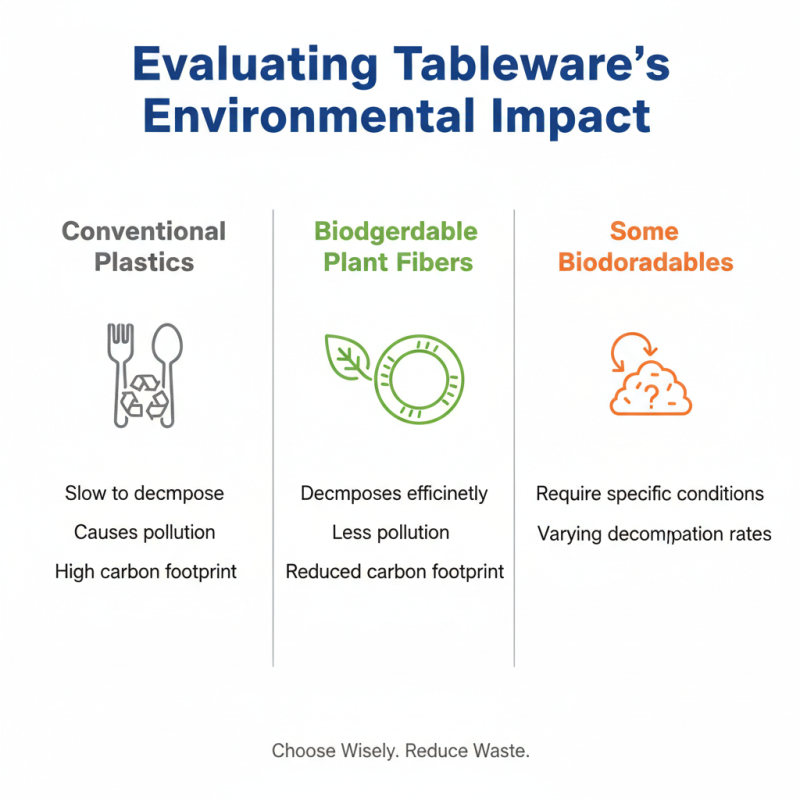
When evaluating the environmental impact of different tableware options, consider the materials used. Biodegradable tableware, like those made from plant fibers, breaks down more efficiently than conventional plastics. This means less pollution and a reduced carbon footprint. However, not all biodegradable options decompose equally. Some require specific conditions that may not always be achievable.
Look for certifications that ensure genuine biodegradability. Products labeled with credible certifications are often more reliable. Take time to research their life cycle. An item that biodegrades well might still contribute to environmental harm during production or transport. Balance these factors to make informed choices.
Tips: Always ask suppliers about sourcing and disposal methods. Engage in discussions about their materials. A transparent supplier provides better options for your business. Remember, even with biodegradable choices, waste management practices play a crucial role. Assess how your tableware will be disposed of after use.
Rely on expert opinions to guide your decisions. Consult with environmental organizations or sustainability experts. Their knowledge can help navigate the complexities of eco-friendly tableware. This diligence can elevate your business's commitment to sustainability.
Cost-Effectiveness: Budgeting for Biodegradable Tableware in Your Business
Cost-effectiveness is crucial when selecting biodegradable tableware for your business. Many companies believe that eco-friendly options are inherently more expensive. However, this isn't always the case. With increasing demand, many suppliers offer competitive pricing. It's essential to compare costs across different suppliers. You might find substantial savings if you buy in bulk. This can reduce your overall expenses.
Additionally, consider lifecycle costs. Biodegradable products may seem pricier upfront but can be more cost-effective over time. They often reduce disposal fees, especially in cities with strict waste management policies. Using biodegradable tableware can enhance your brand image, attracting eco-conscious customers. However, it’s vital to evaluate the quality of the products. Some cheaper options may not perform well, leading to customer dissatisfaction.
Another aspect to reflect on is the sourcing of these materials. Locally sourced products may come at a higher initial price but can save on shipping costs. Investing in quality biodegradable tableware can reduce waste and improve your business's credibility. Choose options that align with your values and customer expectations. Be mindful of the trade-offs your business needs to consider when making this transition.