Top Tips for Choosing the Best Degradable Tray for Your Needs?
In today's environmentally conscious market, choosing the right degradable tray is crucial for businesses. Degradable trays are an effective solution for reducing plastic waste. According to recent reports, the global market for biodegradable packaging is expected to reach $400 billion by 2025. This growth is fueled by increasing consumer demand for sustainable alternatives.
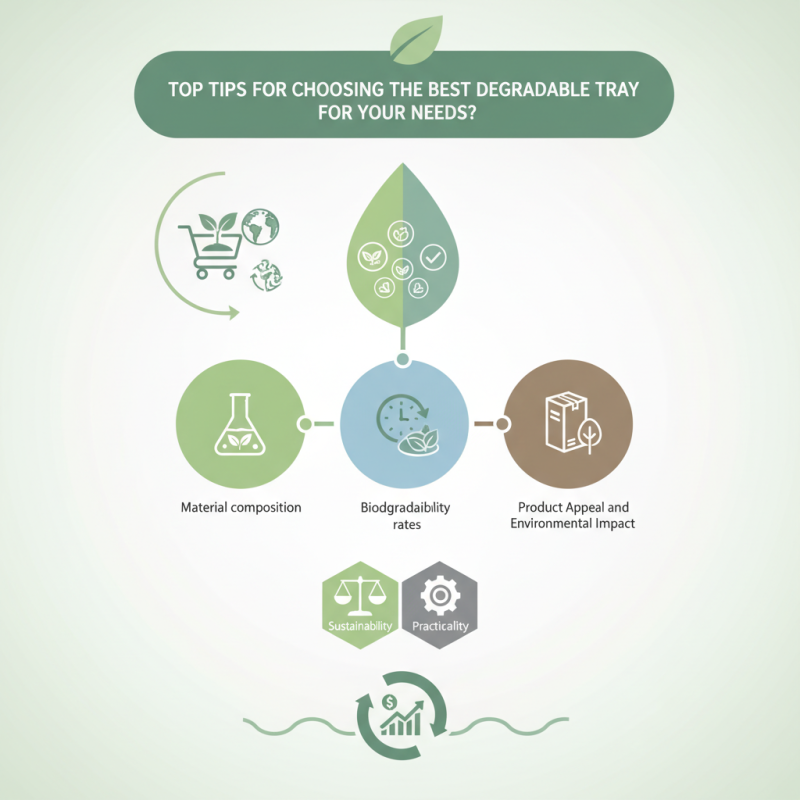
However, not all degradable trays are created equal. It's essential to consider various factors such as material composition and biodegradability rates. A recent study showed that only 30% of marketed biodegradable products meet the necessary standards for decomposition. Businesses must navigate through numerous options to find a reliable solution.
Understanding the specifications of degradable trays is vital. The right choice can enhance product appeal and reduce environmental impact. As we delve into the key tips for selecting the best degradable tray, it’s important to reflect on the balance between sustainability and practicality. Choosing wisely can lead to significant long-term benefits, but challenges remain in ensuring quality and performance.
Understanding the Importance of Degradable Trays in Sustainable Living
Degradable trays play a significant role in sustainable living. As plastic waste continues to burden our environment, alternatives like degradable trays offer a vital solution. According to a 2020 report by the World Economic Forum, around 300 million tons of plastic are produced globally each year, with a substantial portion ending up in landfills and oceans. Degradable trays, made from materials such as cornstarch and sugarcane, can break down more quickly, reducing this impact.
However, not all degradable trays are created equal. They often differ in biodegradability rates and material composition. Research shows that some products labeled as "biodegradable" may not degrade efficiently in natural conditions. Awareness of these differences is essential for consumers. A 2021 study by the Ellen MacArthur Foundation highlighted that only 9% of plastic is recycled effectively. This challenges the notion of convenience over sustainability in our daily choices.
Using degradable trays can aid in minimizing our footprint, yet it's crucial to seek quality products. Certification from recognized eco-labels can guide consumers. Many trays can degrade within 90 days under the right conditions, but improper disposal can extend their lifespan. Awareness of local composting facilities is vital. Continuous education and conscious choices push us toward a more sustainable future.
Top Tips for Choosing the Best Degradable Tray for Your Needs
Understanding the Importance of Degradable Trays in Sustainable Living
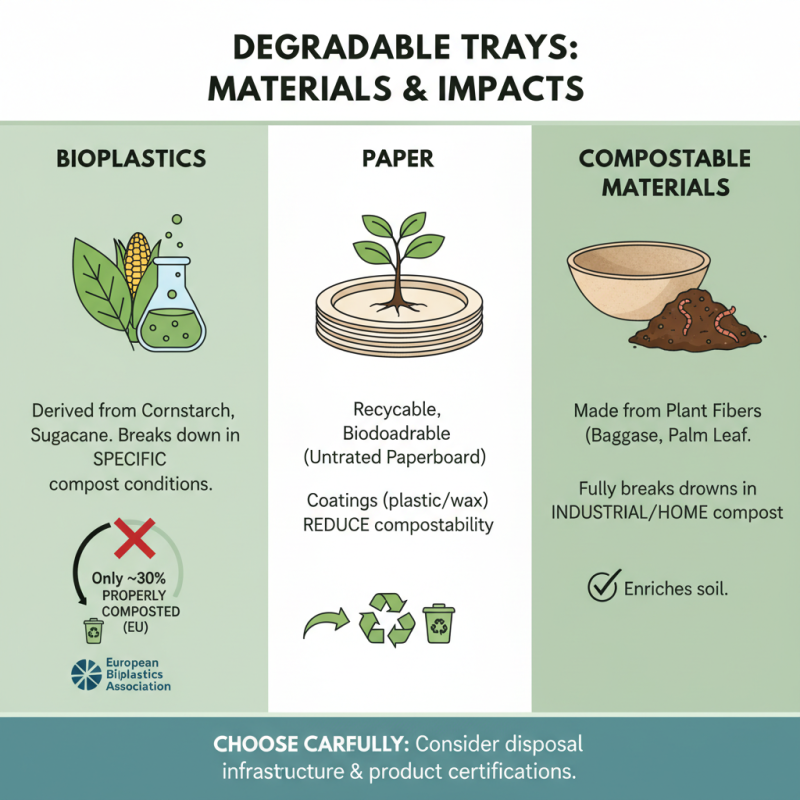
Types of Degradable Trays: Materials and Their Environmental Impact
Choosing the right degradable tray requires careful consideration of the materials used and their environmental effects. Many trays are made from bioplastics, paper, or compostable materials. Bioplastics, often derived from cornstarch or sugarcane, can break down effectively under specific conditions. However, only about 30% of bioplastics are composted properly, according to the European Bioplastics Association.
Paper trays are another popular choice. They are biodegradable and can decompose in home compost settings within weeks. Yet, not all paper is created equal; some are treated with chemicals, which can hinder composting. Industry reports note that untreated, standard paper has a lower environmental impact than many plastic alternatives.
Compostable materials, which consist of natural substances, are gaining traction. Research indicates they can break down within 90 to 180 days in composting systems. Yet, if these materials end up in landfills, they might not degrade efficiently. Understanding the lifecycle of each tray type is critical. This awareness can foster better decision-making in packaging choices.
Evaluating the Functionality of Degradable Trays for Specific Use Cases
When selecting a degradable tray, it's essential to assess its functionality for specific applications. Recent studies show that over 70% of consumers prefer sustainable products for food packaging. This trend signals a shift in market demands. A degradable tray should align with its intended use, such as food storage, gardening, or personal care products. Understanding material composition is crucial. For example, some trays decompose in a compost environment, while others require industrial conditions.
Evaluating the needs of your project is vital. If you're using trays for takeout, consider waterproof and oil-resistant options. A trick is to test the tray with real food items to gauge its performance. Data indicates that 55% of biodegradable trays fail in moisture retention. This can lead to spills, creating additional mess.
Additionally, eco-labels can influence consumer choices. However, not all labels are equal, sometimes misleading consumers. To avoid pitfalls, research certifications that ensure proper composting and biodegradability. This insight can enhance your purchasing power, leading to informed decisions. Remember, the right tray should fulfill functional requirements while promoting environmental sustainability.
Key Features to Look for When Choosing a Degradable Tray
When selecting a degradable tray, it's essential to focus on key features that ensure it meets your needs. Look for a tray made from natural materials. These materials break down easily, minimizing environmental impact. Consider thickness and durability, as a sturdy tray can handle different foods without tearing. A good tray should hold up under various conditions, even if it may not always be perfect.
Another important factor is the tray's design. Ensure it has compartments, if needed, for portion control. This helps in serving and storing food effectively. Evaluate how the tray feels and how easy it is to handle. Lightweight options might sound appealing, but they shouldn't compromise strength. Also, check for moisture resistance, as food spills can sometimes happen.
Lastly, think about the biodegradability timeline. Some products claim to break down quickly, but not all deliver on that promise. Research certifications and read reviews before making a choice. You may find some products perform well initially but fail in the long run. Don’t overlook the importance of asking questions. Reaching out to knowledgeable sources can help clarify doubts. This can guide you to a better decision.
Top Tips for Choosing the Best Degradable Tray for Your Needs
| Feature |
Description |
Importance |
| Material Composition |
Look for trays made from natural materials like PLA or starch blends. |
Ensures biodegradability and environmental safety. |
| Size and Capacity |
Choose appropriate sizes based on your specific use cases. |
Critical for accommodating the items being served or packaged. |
| Sturdiness |
Evaluate how much weight the tray can handle without breaking. |
Important for preventing spills and ensuring food safety. |
| Heat Resistance |
Look for trays that can withstand high temperatures, if necessary. |
Essential for food items that need to be served hot. |
| Customization Options |
Check if the tray can be printed on or customized for branding. |
Great for marketing and creating brand recognition. |
| Price Point |
Consider your budget while choosing the tray. |
Balance cost without compromising on quality and features. |
Assessing Cost-Effectiveness of Degradable Trays for Your Budget Needs
When considering the cost-effectiveness of degradable trays, it’s essential to analyze how they fit within your budget. Industry reports indicate that while degradable trays can be more expensive upfront, they often provide long-term savings. For instance, companies that switch to degradable options report a reduction in waste disposal costs by up to 50%. Such savings can offset the initial investment.
When evaluating options, consider the material used for the trays. Cornstarch-based trays, for example, have gained traction due to their renewable sourcing. However, these may come at a premium price. A thorough cost analysis can help to determine which materials yield the best return on investment.
Tips: Always assess the biodegradability timeframe of each product. Some may break down in just a few months, while others linger for years. Additionally, factoring in transportation and storage costs is crucial. Some suppliers offer reductions in these expenses. Balancing environmental benefits with financial implications ensures wise choices.
Ultimately, while degradable trays can incur higher initial costs, organizations can achieve greater sustainability and long-term savings with careful planning.