Why Choose Degradable Takeout Boxes for Sustainable Living?
The world is facing an environmental crisis. Plastic waste floods our oceans and landscapes, disrupting ecosystems. This makes it imperative for us to consider alternatives. The degradable takeout box emerges as a viable solution.
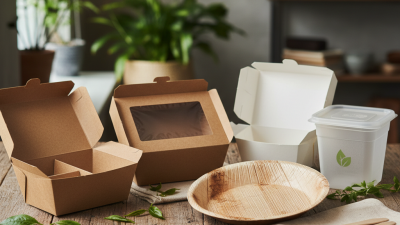
These eco-friendly containers break down naturally, reducing landfill waste. Many restaurants are now making the switch. A degradable takeout box can significantly lessen our carbon footprint. Imagine enjoying a warm meal that leaves no harmful traces behind.
However, not all products labeled as degradable are created equal. Consumer awareness is key to making right choices. By choosing a degradable takeout box, we take a step towards sustainable living. Each small decision counts in this global effort. Reflect on the packaging choices you make every day. Together, we can pave the way for a cleaner future.
The Environmental Impact of Traditional Takeout Containers
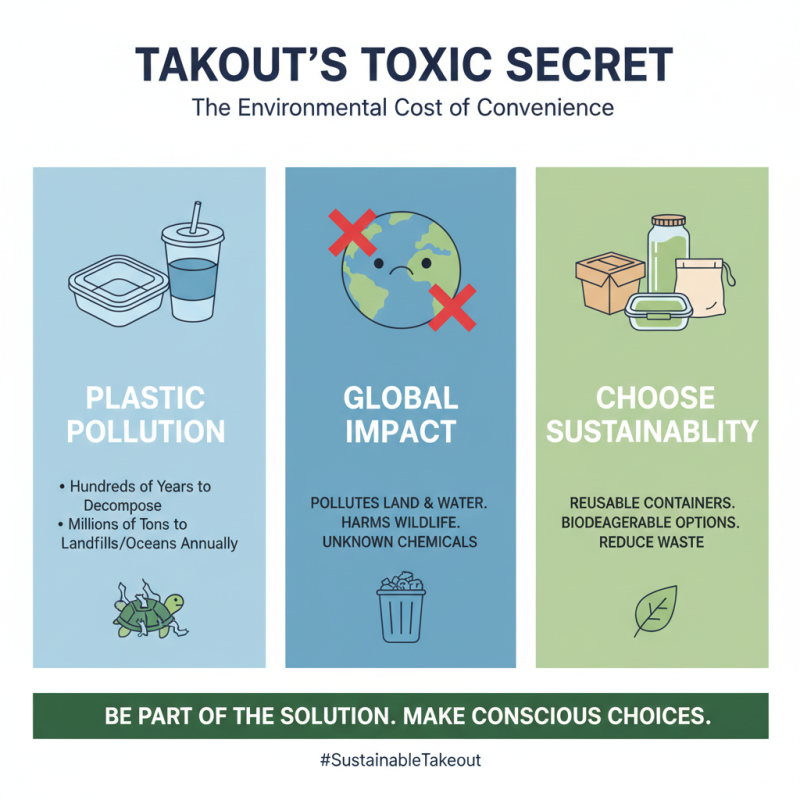
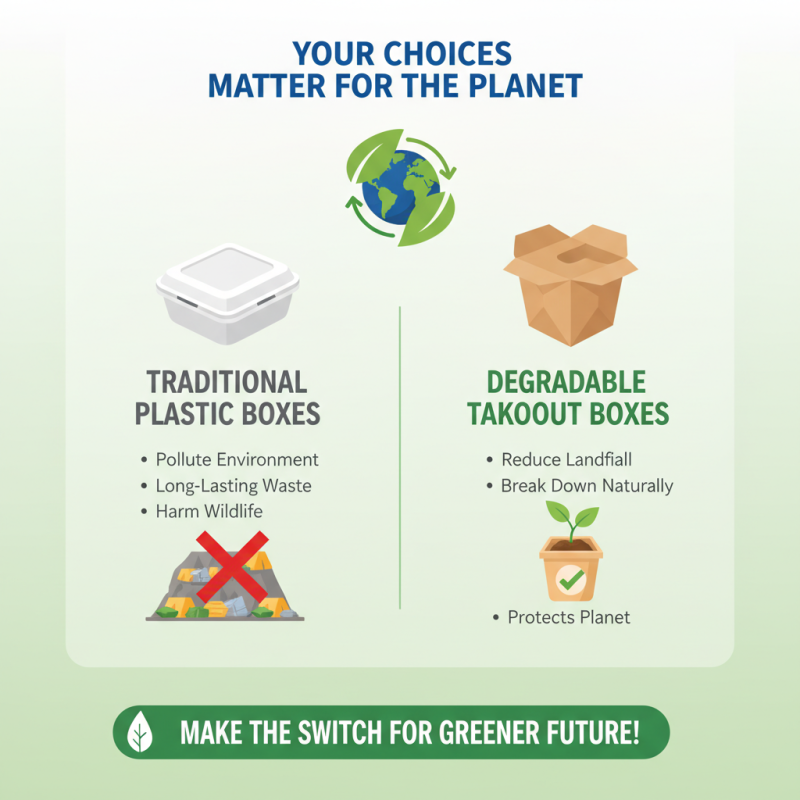
Takeout containers have become a staple in our fast-paced lives. However, traditional options often come with severe environmental consequences. Plastic containers take hundreds of years to decompose, polluting our land and oceans. Every year, millions of tons of plastic end up in landfills. Many people are unaware of this impact yet continue to choose convenience over sustainability.
The reality is stark. People grab their meals and toss the containers without a second thought. Cardboard boxes may seem better, but they are often treated with chemicals that compromise their biodegradability. The result? These materials contribute to environmental degradation, harming wildlife and ecosystems. The convenience we seek comes at a high price.
Degradable takeout boxes offer a potential solution. They break down more easily in natural environments. Transitioning to these options may seem daunting, but small changes can lead to significant benefits. Reflecting on our choices is essential. It encourages us to think about the lasting effects of our convenience-driven lifestyles.
Understanding Degradable Materials and Their Benefits
Degradable materials are becoming popular in the world of takeout options. These materials are designed to break down more quickly than traditional plastics. They offer significant benefits for our environment, reducing waste in landfills. When we use degradable takeout boxes, we take a step towards more sustainable living. These boxes can decompose in natural settings, which is a plus.
Understanding how these materials work is essential. Many degradable boxes are made from plant-based substances. They can break apart in specific conditions, like heat and moisture. However, not all degradable boxes decompose in the same way. Some require special facilities to break down properly. It’s important for consumers to be aware of this.
The transition to degradable options can feel overwhelming. People may not always know how to dispose of these materials correctly. Misplaced items still contribute to pollution. So, consumer education is crucial. We need to understand that choosing degradable doesn’t mean zero waste. It’s about making better choices for a healthier planet, even if we're still learning.
Why Choose Degradable Takeout Boxes for Sustainable Living? - Understanding Degradable Materials and Their Benefits
| Material Type |
Compostability |
Biodegradation Time |
Environmental Impact |
Cost (Per Box) |
| PLA (Polylactic Acid) |
Industrial Composting |
90-180 days |
Low carbon footprint, renewable resources |
$0.25 |
| Bagasse |
Compostable |
30-60 days |
Uses waste sugarcane, sustainable |
$0.20 |
| Palm Leaf |
Compostable |
2-4 months |
Natural materials, biodegradable |
$0.50 |
| Starch-based Plastics |
Compostable |
90-120 days |
Reduces fossil fuel dependency |
$0.30 |
| Recycled Paper |
Compostable |
1-3 months |
Uses post-consumer waste, eco-friendly |
$0.15 |
Comparing Degradable Takeout Boxes to Non-Biodegradable Options
When it comes to takeout boxes, many people overlook the impact they have on the environment. Non-biodegradable options, like standard plastic containers, take hundreds of years to break down. They litter our landscapes and oceans, affecting wildlife. Seeing plastic waste in natural habitats is a growing concern. It’s a reminder of the urgency to change our habits.
Degradable takeout boxes offer a promising alternative. Made from materials like cornstarch or bamboo, they break down more easily in landfills. However, not all degradable options are truly effective. Misleading labels can create confusion. If consumers don’t do their research, they may end up choosing products that aren't as eco-friendly as believed. We need to reflect on our choices and demand better transparency from manufacturers.
Transitioning to degradable options is not a cure-all. It requires changes in consumer behavior and waste management. For instance, educating ourselves about proper disposal methods is crucial. We must also consider the energy used in production. Sustainability is a complex issue but making informed choices can lead to a positive impact. Every small step counts in the fight against pollution.
The Role of Consumer Choices in Promoting Sustainability
As consumers, our choices significantly impact the environment. Opting for degradable takeout boxes is a small yet meaningful step towards sustainability. These containers break down naturally, reducing landfill waste. When we choose eco-friendly options, we send a message that we care about the planet.
Tips: Look for compostable labels. Reading labels can make a difference. Every little effort counts towards a cleaner environment.
However, some consumers may still prefer traditional plastic boxes. People often worry about durability. It's essential to understand that many biodegradable options are robust enough for most food types. Trying new materials might feel uncomfortable, but it promotes innovation in sustainable practices.
Tips: Support local businesses that use sustainable packaging. Encouraging them can lead to bigger changes in the industry. Small decisions can collectively lead to significant impacts.
Real-Life Examples of Businesses Switching to Degradable Packaging
Many businesses are taking steps to adopt degradable takeout boxes. These are not just eco-friendly, but also practical. For example, a local café recently switched to compostable containers. Customers noticed the change and appreciated the effort to reduce waste. This move not only reflects a commitment to sustainability but also creates a unique selling point.
Another small restaurant decided to transition to plant-based packaging. The owner shared challenges faced during this switch. Sourcing reliable suppliers was tough, and costs were higher initially. Some customers expressed concerns about quality. However, the owner emphasized the importance of these changes for future generations. Despite hurdles, the restaurant is now part of a larger community effort towards sustainability.
A delivery service has also moved to degradable packaging. They offer incentives for customers who opt for eco-friendly options. While not everyone is on board yet, the service sees this as a long-term investment. The shift isn't perfect, and feedback varies. Yet, every step toward sustainable living is a step worth taking.
Comparison of Packaging Materials Used by Restaurants