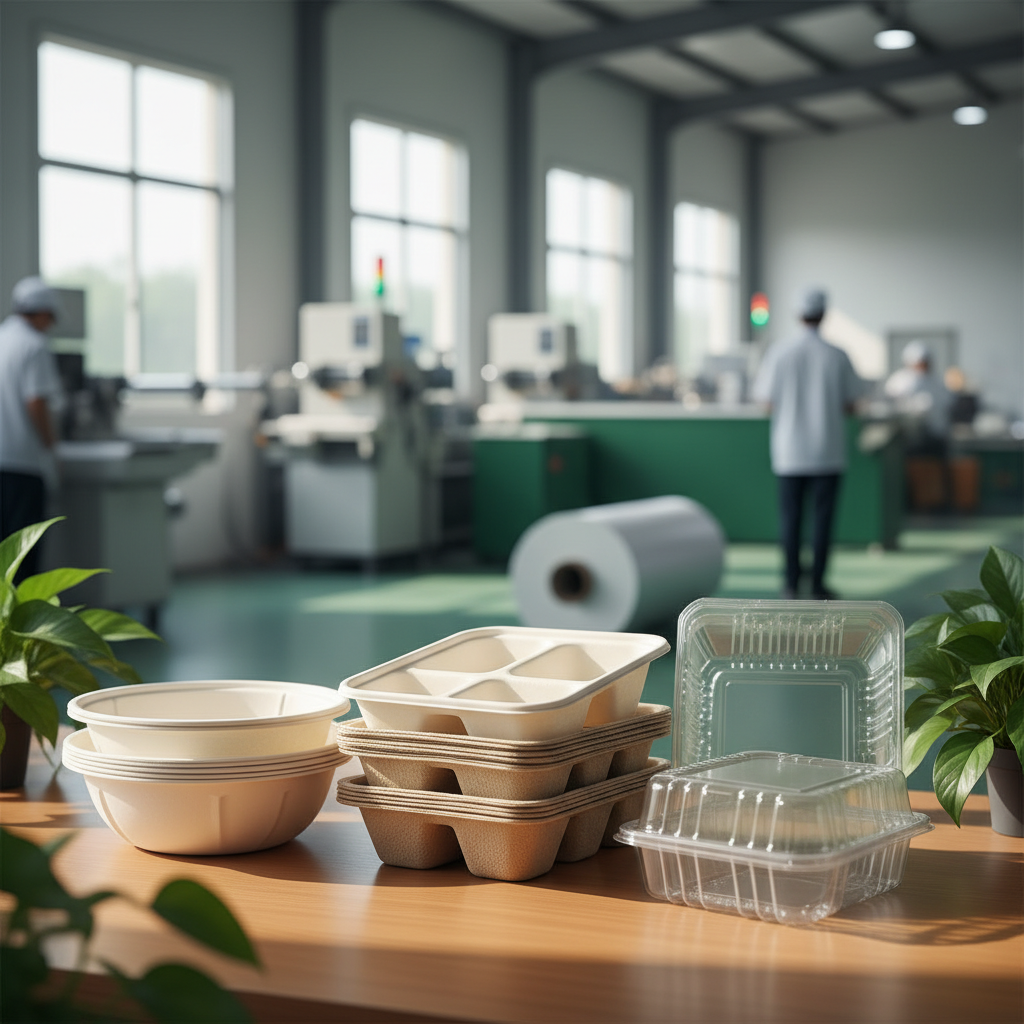
Top 10 Benefits of Using Degradable Trays for Sustainable Packaging Solution
In recent years, the growing concern over environmental sustainability has led to significant innovations in packaging solutions. Among these, the use of degradable trays stands out as a promising approach to reduce waste and enhance eco-friendliness. Industry expert Dr. Emily Carter, a leading figure in sustainable packaging, emphasizes this shift by stating, "Adopting degradable trays not only minimizes our ecological footprint but also sets a precedent for future materials in packaging." This perspective highlights the urgency and importance of transitioning to more sustainable alternatives in an era where plastic pollution poses a critical threat to our planet.

As consumers and businesses alike become more environmentally conscious, the demand for solutions that align with sustainability goals has surged. Degradable trays offer a multifaceted approach to this demand, providing not only a practical packaging option but also an effective way to promote a circular economy. These trays, designed to break down naturally over time, contribute to reducing landfill waste and encourage responsible disposal practices. By integrating degradable trays into supply chains, companies can not only bolster their brand image but also actively participate in the global effort to combat climate change.
Overall, the benefits of using degradable trays as a sustainable packaging solution are manifold. From reducing plastic waste to enhancing consumer appeal, the impact of these trays extends far beyond mere convenience. As the industry evolves, the integration of such innovative materials becomes increasingly vital, paving the way for a greener future and echoing Dr. Carter's vision for sustainable progress in packaging.
Benefits of Degradable Trays in Reducing Plastic Waste
Degradable trays represent a significant advancement in sustainable packaging, particularly in addressing the global crisis of plastic waste. One of the primary benefits of these trays is their ability to break down more rapidly than traditional plastic. Unlike conventional plastic products that can linger in landfills for centuries, degradable trays are designed to decompose through natural processes, significantly reducing the amount of waste that ends up in our environment. This shorter decomposition time not only lessens landfill burden but also minimizes the harmful environmental impact associated with plastic pollution.
Moreover, degradable trays often utilize materials that are derived from renewable resources, further enhancing their eco-friendliness. By opting for biodegradable materials, businesses can contribute to a circular economy, where the lifecycle of products is extended through responsible consumption and waste management. The use of such trays helps to alleviate concerns over harmful residues and microplastics that persist in ecosystems, promoting healthier ecosystems and a cleaner planet.
As consumers increasingly seek out sustainable options, the adoption of degradable trays also presents an opportunity for businesses to align with environmental values, foster brand loyalty, and appeal to a growing market of eco-conscious consumers.
Enhanced Brand Image through Sustainable Packaging Solutions
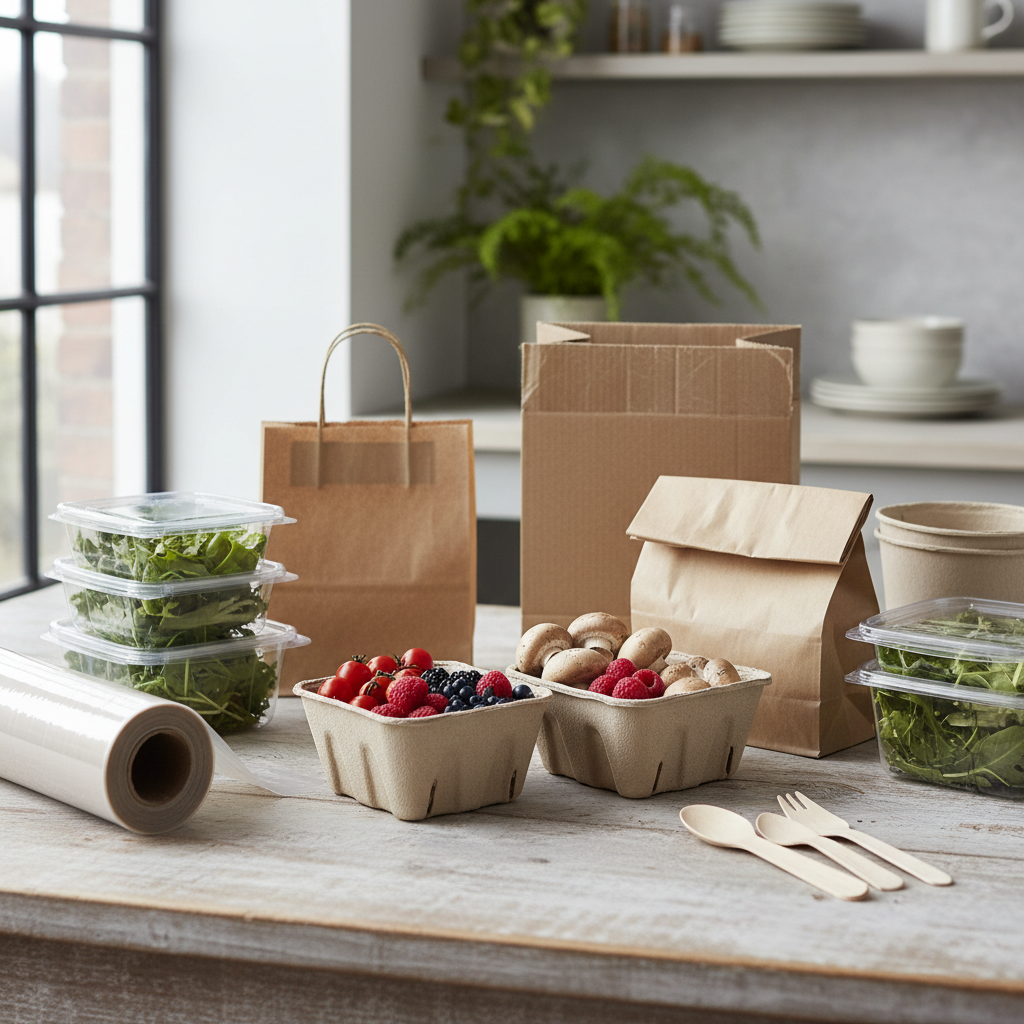
Sustainable packaging solutions, such as degradable trays, significantly enhance a brand's image by aligning with consumer preferences for environmentally friendly practices. According to a report by Nielsen, around 66% of global consumers are willing to pay more for sustainable brands, showcasing a clear market trend that prioritizes eco-consciousness. This shift in consumer behavior not only drives brand loyalty but also positions companies as leaders in corporate social responsibility.
Moreover, the use of degradable trays can help businesses differentiate themselves in a crowded marketplace. A study from the Sustainable Packaging Coalition emphasizes that 70% of consumers are willing to change their shopping habits to reduce environmental impact. By incorporating sustainable packaging, brands not only meet customer expectations but also manage to communicate their commitment to sustainability effectively. In doing so, companies foster deeper connections with eco-aware consumers, which can ultimately lead to increased sales and an enhanced reputation in the marketplace.
Cost-Effectiveness of Degradable Materials in Large Scale Production
Degradable trays are increasingly recognized as a cost-effective solution in large-scale production, providing manufacturers with an opportunity to reduce waste and enhance sustainability. According to a report by Smithers Pira, the global market for biodegradable plastics is projected to reach $6.9 billion by 2024, reflecting a compound annual growth rate (CAGR) of 13.3%. This growth is driven by rising consumer awareness of environmental issues and the increasing demand for sustainable packaging solutions. Degradable trays, made from materials like PLA (polylactic acid) and PHA (polyhydroxyalkanoates), not only offer a sustainable alternative but also align with companies' corporate social responsibility goals.
Moreover, when examining the cost-effectiveness of degradable materials, a study by Grand View Research suggests that while the initial investment in biodegradable materials may be slightly higher compared to traditional options, the long-term benefits, including reduced waste management costs and compliance with environmental regulations, can lead to substantial savings. As businesses look to innovate and adapt to eco-friendly practices, adopting degradable trays can enhance their market competitiveness while solidifying a commitment to sustainability, which is increasingly expected by consumers.
Consumer Preferences Shifting Toward Eco-Friendly Packaging Options
As consumer awareness about environmental issues continues to rise, preferences are shifting decisively toward
eco-friendly packaging solutions. Many individuals are now more inclined to choose
products packaged in sustainable materials as they recognize the impact of their choices on the planet. This growing
demand for green packaging reflects a broader trend where consumers are willing to pay a premium for products that
align with their values, emphasizing their commitment to sustainability and reduced plastic waste.
Degradable trays serve as an exemplary solution in this context, offering
a practical alternative to traditional plastic packaging. These trays not only break down more easily in the
environment but also contribute to a significant reduction in long-term landfill waste. By using degradable materials,
brands can cultivate a positive image, resonate with eco-conscious consumers, and enhance customer loyalty. The
shift towards such sustainable options demonstrates a collective movement towards a greener future, where both
consumers and producers are taking active steps to protect the environment.
Compliance with Evolving Environmental Regulations and Standards
As regulatory frameworks around packaging continue to evolve, companies are increasingly recognizing the importance of compliance with environmental standards. Degradable trays represent a forward-thinking solution that not only meets but often exceeds these requirements. According to a report by the European Commission, over 70% of European consumers support stricter regulations on packaging waste, pushing manufacturers to seek eco-friendly alternatives. Degradable trays can break down more efficiently than traditional plastic options, aligning with efforts to reduce landfill contributions and marine pollution.
Utilizing degradable trays offers businesses a strategic advantage in navigating these regulations. By embracing sustainable packaging, companies can significantly lower their carbon footprint. A study by the Ellen MacArthur Foundation highlights that shifting to biodegradable materials can reduce greenhouse gas emissions by up to 50% compared to conventional plastics. This proactive approach not only ensures compliance with current regulations but also prepares businesses for future mandates that prioritize sustainability.
**Tips:**
1. Assess local and global regulations on packaging to ensure that your choices support compliance.
2. Stay informed about emerging materials and technologies that enhance the degradability of your packaging solutions.
3. Engage with suppliers who focus on sustainability to streamline your transition to eco-friendly packaging options.
Top 10 Benefits of Using Degradable Trays for Sustainable Packaging Solution
| Benefit |
Description |
Impact on Sustainability |
Compliance with Regulations |
| Reduced Environmental Impact |
Degradable trays break down naturally, minimizing landfill waste. |
Lower carbon footprint and reduced pollution. |
Aligns with increasing global regulations on waste management. |
| Biodegradable Materials |
Made from renewable resources that can decompose within months. |
Supports circular economy initiatives. |
Complies with new biodegradable certifications. |
| Consumer Preference |
Increasing demand for eco-friendly products among consumers. |
Enhances brand loyalty and customer satisfaction. |
Meets consumer-driven sustainability expectations. |
| Energy Efficient Production |
Manufacturing processes often use less energy compared to traditional plastics. |
Reduces overall environmental footprint during production. |
Conforms to renewable energy standards in production. |
| Cost-Effective in the Long Run |
Potential for lower disposal costs due to reduced waste fees. |
Encourages cost savings while promoting sustainability. |
Supports compliance with sustainability incentive programs. |
| Market Differentiation |
Standing out in a crowded marketplace with eco-friendly options. |
Provides a competitive edge in green product segments. |
Aligns with eco-label and sustainable branding initiatives. |
| Regulatory Compliance |
Designed to meet current and future regulations regarding packaging waste. |
Reduces risk of penalties from non-compliance. |
Eases transitions to new regulatory frameworks. |
| Enhances Corporate Image |
Demonstrates commitment to sustainability and environmental responsibility. |
Improves public perception and trust. |
Meets sustainable business practices expectations. |
| Flexibility and Customization |
Can be tailored to meet specific product needs and consumer preferences. |
Allows innovation in packaging solutions. |
Adapts to changing regulations as packaging requirements evolve. |
| Support for Local Economies |
Often produced using local materials and labor. |
Strengthens local economies through sustainable practices. |
Helps meet local mandates for sustainability. |